


Suggestive selling sounds like a sleazy trick. Mostly it's remembering the roller brush before the customer does.
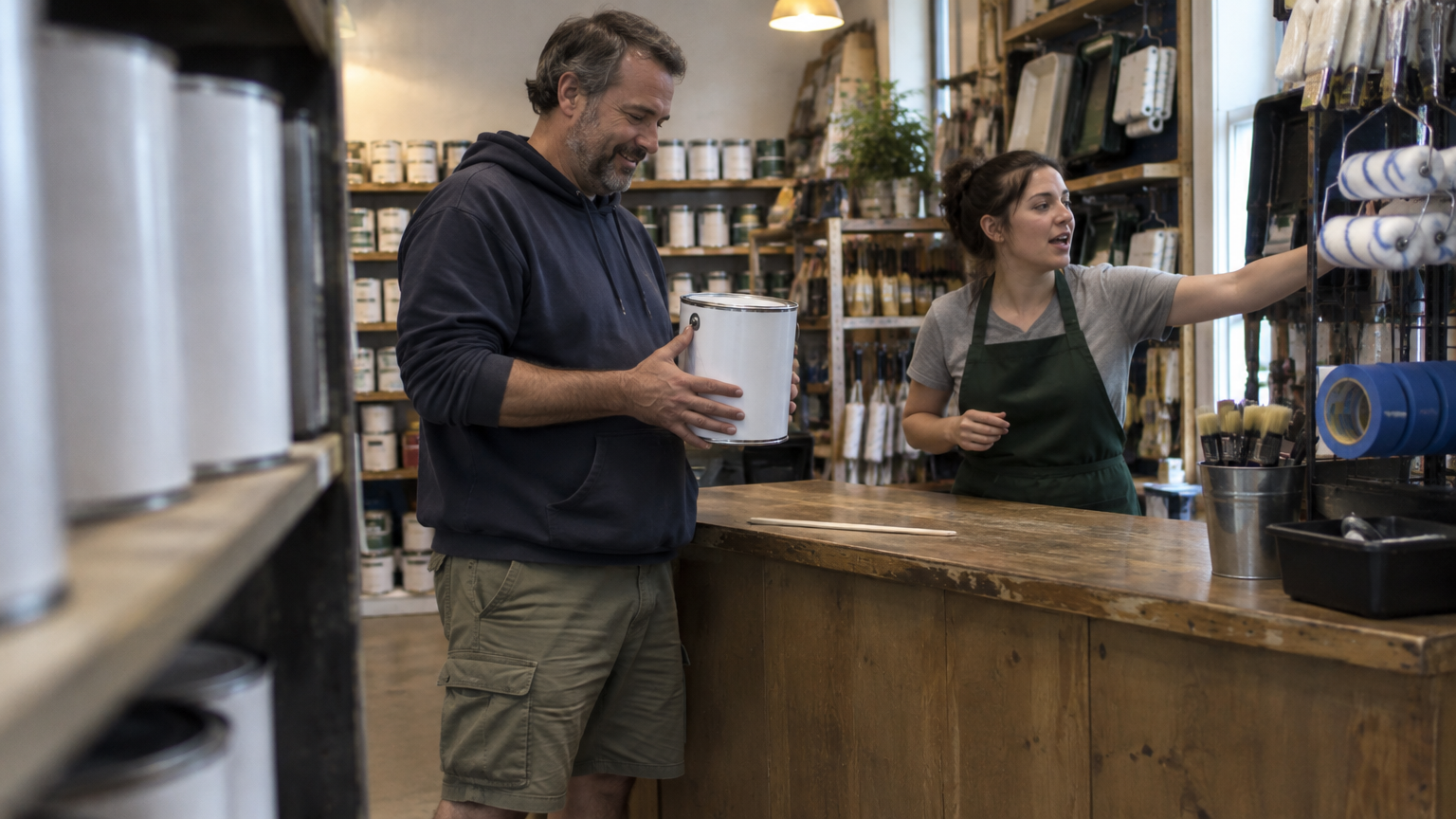
It's Saturday morning in a little neighbourhood hardware shop. A bloke in a navy hoodie and cargo shorts is standing at the paint counter holding a big white tin with both hands. This is Graeme. He's painting the lounge this afternoon. He has the wifes approval on the colour, the tin, and the special glow of a man who hasn't started yet.
Behind the counter is Tash, green apron, grey t-shirt, hair tied back. She's clocked the problem. Graeme has paint. He does not have a roller, a tray, a brush for the edges, or any of the blue tape hanging a metre from his elbow just off the counter. The wooden stirring stick on the counter is the only painting tool he owns.
Tash reaches for the rollers.
Tash: What are you painting?
Graeme: Lounge. This arvo.
Tash: Got a decent roller at home?
Graeme opens his mouth, then shuts it. You can see him mentally searching the garage and finding mostly a broken lawnmower.
Graeme: Probably not a decent one, no.
What is suggestive selling?
Suggestive selling is offering the thing that goes with the thing. The tin needs a roller. The roller needs a tray. The skirting needs tape, unless Graeme is braver than he looks.
It's a close cousin of upselling. Upselling is the better version of what they came in for, like the paint that wipes somewhat clean when a toddler discovers crayons. This one's the add-on. Graeme isn't buying a tin. He's buying a painted lounge, and right now he's got the paint and none of the painting.
Here's the bit people get backwards. Leave Graeme alone and he isn't a happy, unpestered customer. He's a man in his lounge at one o'clock with the lid off, realising he's about to paint a wall with his hands. Then he drives back. Same shorts, paint on his thumb, grumpy.
How do you increase average transaction value?
Average transaction value (ATV) is the value of your total sales divided by the count of sales made.
Graeme was always buying a roller today. The only question was whether he bought it here now, here later and grumpy, or somewhere else on the way home.
So now switch into a parall universe with us, where Tash just processess the sale and does nothing. A scene we've seen play out far too often.
Tash will say to herself..."He looks like he's done this before." "He'd ask if he needed one." Each one is a guess, and each guess costs the customer a trip. We've written about how staff assumptions quietly eat your margin, and this is where they do it most politely.
Her manager, Deb, worked through it with three questions. Will she? Can she? Does she, reliably?
"Can she" was easy. Tash has painted three flats and a dog kennel she knows whats involved and has had a bit of training aorund which products are best to recommend vs which will get the job done but come in a bit cheaper. "Will she" was the real problem, because asking felt pushy.
So Deb binned "Do you want a roller with that?", which sounds like a drive-through, and gave her one question to lead with: "What are you painting?" The answer does the selling. "The lounge" means rollers, a tray and tape. "The bathroom ceiling" means a different chat, possibly about his life choices.
"Does she, reliably" took a few more weeks. Asking on a quiet Tuesday is easy. Asking with four people queuing is what makes it a habit.
What is UPT in retail?
UPT stands for units per transaction: the number of items sold divided by the number of sales. If ATV is how much people spend, UPT is how many things they walk out holding.
Graeme, left alone, is a UPT of one. One tin, one doomed afternoon.
UPT is the honest number here. A big ATV can come from one pricey item, but UPT only climbs when somebody remembers the brush. It usually sags on busy shifts, when nobody has time to ask.
Just don't turn UPT into a target and walk off. Tell a nervous team to "get the UPT up" and you'll get chewing gum shoved at a man buying a ladder.
How do you know the coaching is working?
Debs gut said Tash had improved. Gut is a decent judge of character and a rubbish judge of progress.
That's the gap Be Brilly fills. Every sale has four moments: Greet, Meet, Close, Upsell. We call it GMCU. Suggestive selling lives in the Upsell chapter and it leans on the Meet, because you can't suggest the right thing until you know the job.
Deb watches a sale, scores Tash's Upsell out of 10 and ticks the behaviour she saw, like suggesting a related item. The next score shows whether the coaching landed. Brilly, the AI bit, spots patterns across the team (say, Upsell slipping when it's busy) and suggests what to coach next.
A suggestive selling checklist for store managers
- Ask about the job, not the product. "What are you painting?" opens more add-ons than any script.
- Suggest the one thing they'll miss most. One roller is helpful. A roller, a tray, a drop sheet and a stepladder is an ambush.
- Put it in their hand. It's easier to say yes to a roller you're already holding.
- Take no nicely. "No worries, shout if you change your mind." A good suggestion survives a no.
- Watch UPT and ATV, then coach the moment. The numbers say if it's happening. One watched sale says why.
Graeme left with the tin, a roller, a tray and a roll of blue tape. And the free stirring stick, carried out like a trophy.
He did not come back that afternoon. It's the best review a hardware shop ever gets.
Nobody has ever painted a room with just paint.